"Words per minute" gets used to describe two very different things, and mixing them up leads to bad estimates. Reading speed tells you how long an article will take someone to read. Speaking speed tells you how long a script will take to deliver out loud. They're not interchangeable, and the gap between them is bigger than most people assume.
Average Reading Speed
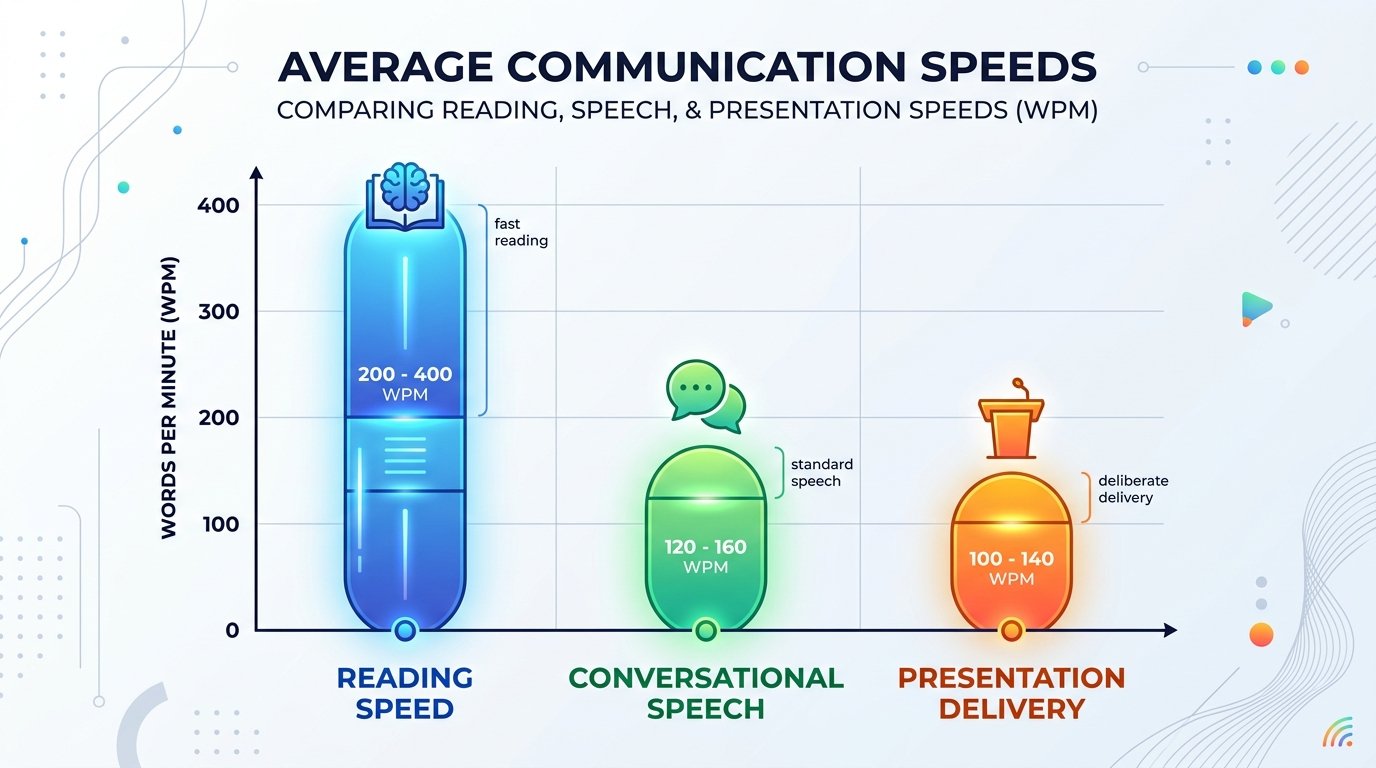
Adult silent reading speed for straightforward text typically falls between 200 and 250 words per minute. That number drops for dense academic or technical material, where readers slow down to process unfamiliar terms and complex sentence structure, and it rises for simple, familiar content skimmed casually.
This is the number blog platforms and publishers use to generate "5 minute read" style estimates at the top of an article — they're taking the word count and dividing by roughly 225 words per minute, then rounding.
Average Speaking Speed
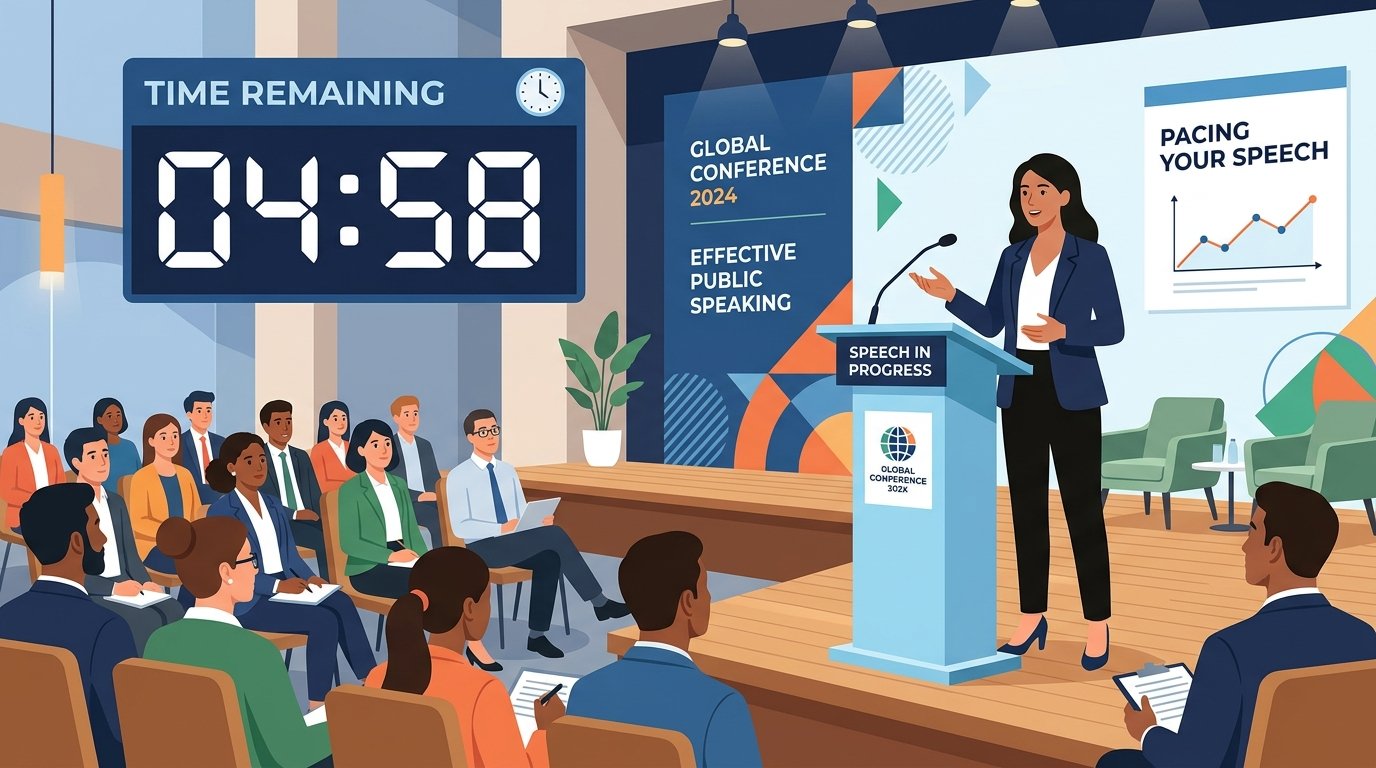
Speaking speed is considerably slower than reading speed, which surprises people who haven't calculated it before. Conversational speech runs around 120–150 words per minute. Presentations and public speaking tend to run slower still — often 110–130 words per minute — because pauses, emphasis, and audience engagement all eat into the pace.
This matters enormously for anyone writing a script. A 1,000-word speech isn't a 4-minute speech at reading pace; it's closer to 7–8 minutes once you account for realistic delivery speed.
How to Calculate Your Own Rate
The generic averages above are a starting point, not a personal measurement. To find your actual rate:
Pick a passage of text you haven't read before, at least 300 words long.
Set a timer for exactly one minute.
Read at your normal pace and mark where you stop when the timer ends.
Count the words up to that point.
Repeat this two or three times and average the results — a single reading can be thrown off by an unfamiliar word or a distraction. For speaking speed, record yourself reading a script aloud at your natural pace, then divide the script's word count by the recording's length in minutes.
Why This Number Actually Matters
For writers: Reading time estimates shown alongside an article affect whether people click through and whether they finish reading. Underestimating creates a mismatch that damages trust; overestimating can make short, easy content look intimidating.
For speakers: Getting your speaking-pace math wrong is one of the most common reasons presentations run over time. A 10-minute conference slot at 130 words per minute allows for roughly 1,300 words — not the 2,000 many first-time speakers try to cram in.
For students: Timed reading comprehension tests are partly measuring speed alongside accuracy. Knowing your baseline reading speed helps you pace yourself realistically during an exam instead of guessing.
Quick Reference Table
| Activity | Typical Speed (WPM) |
|---|---|
| Silent reading (average adult) | 200–250 |
| Skimming | 400–700 |
| Academic/technical reading | 150–200 |
| Conversational speech | 120–150 |
| Formal presentation delivery | 110–130 |
| Audiobook narration | 150–160 |
Calculating Reading Time for Your Own Content
If you're writing content and want an accurate reading-time estimate rather than a generic guess, paste your draft into word counter, which shows your word count instantly — from there, divide by 225 for a reasonable average-reader estimate, or by 130 if you're timing something meant to be read aloud.