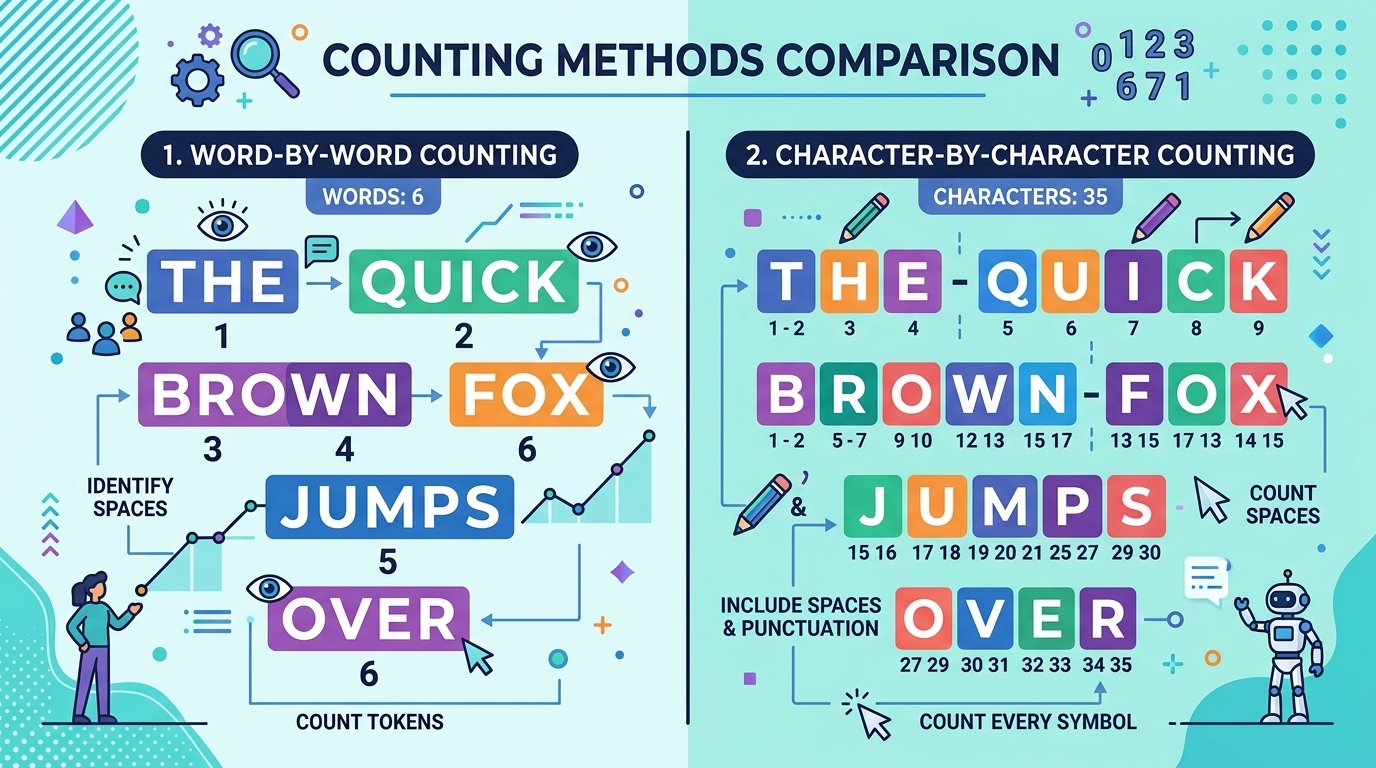
These two terms get used almost interchangeably, but they measure genuinely different things, and picking the wrong one can cause real problems — like a tweet that gets cut off or a meta description that truncates in search results. Here's what each one actually tracks and when each matters.
What a Word Counter Measures
A word counter counts complete words — sequences of letters or numbers separated by spaces. "The quick brown fox" is four words, regardless of whether those words are short ("a," "I") or long ("unbelievably"). Word counts are the standard for:
- Academic essays and assignments
- Books and manuscripts
- Blog posts and articles
- Scripts and speeches
Word count is a rough but useful proxy for how much content or effort a piece of writing represents, since it doesn't get skewed by whether individual words happen to be long or short.
What a Character Counter Measures
A character counter counts individual characters — letters, numbers, punctuation, and often spaces (though some tools offer a "characters without spaces" toggle). "The quick brown fox" is 19 characters including spaces, or 16 without them. Character counts matter wherever there's a hard technical limit on space:
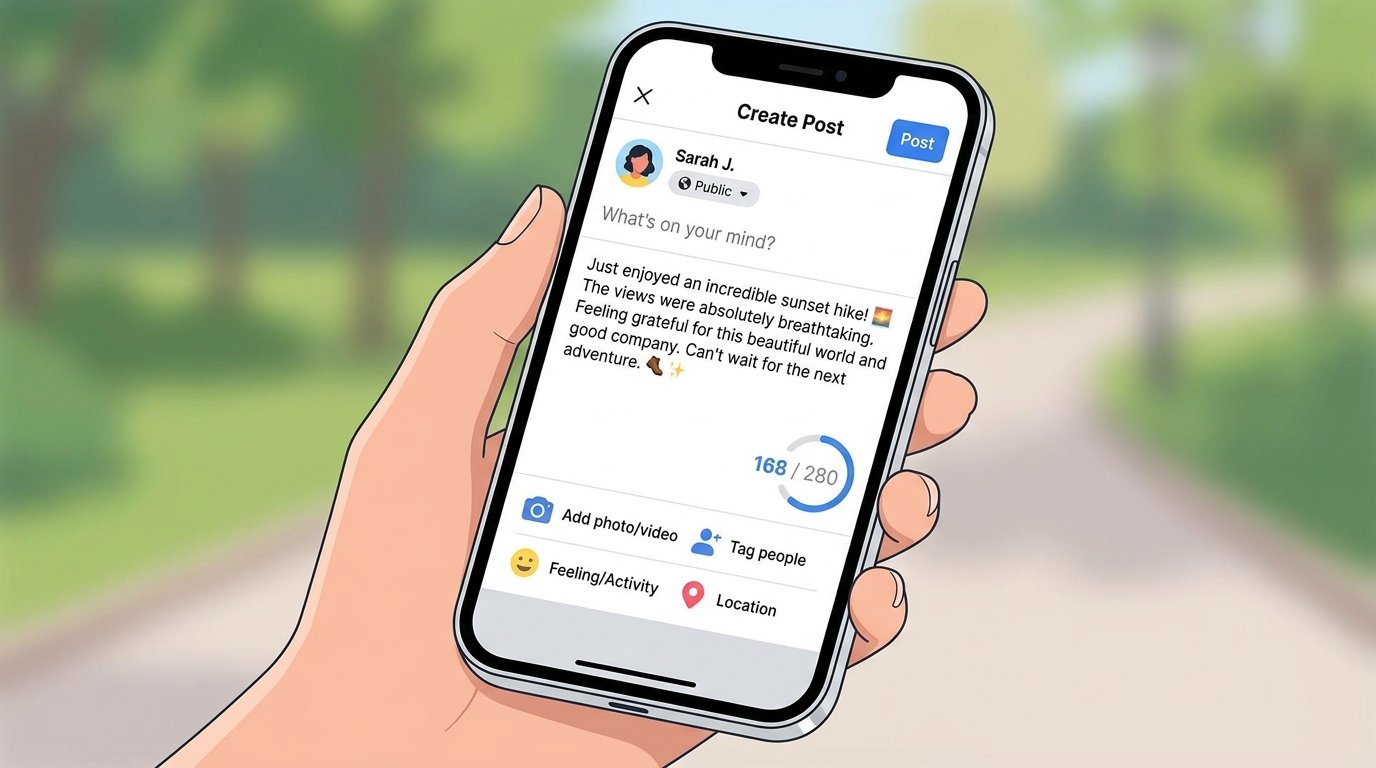
- Social media posts (X/Twitter's 280-character limit is the classic example)
- SMS messages, which are billed and split by character count
Meta titles and meta descriptions for SEO, which get truncated at a character threshold in search results
Form fields with database-imposed character limits
Subtitle and caption timing, where character count affects reading speed on screen
Why the Two Numbers Diverge
This is the part people miss: word count and character count don't move together in a predictable ratio. "I am on my way" is five words and 16 characters. "Extraordinarily" is one word and 15 characters — almost the same character count as that entire five-word sentence. A piece of writing full of long, technical words can have a modest word count but blow past a character limit, while a piece full of short words can look long by word count but comfortably fit a tight character budget.
This is exactly why relying on word count alone for platforms with character limits is a mistake. Someone writing a 40-word X post using long words might be surprised to find it doesn't fit, while a 40-word post using short, simple words fits with room to spare.
Which One Should You Actually Track?
Track word count when: you're working against an assignment word limit, drafting long-form content, or estimating reading time for an article or script.
Track character count when: you're writing for a platform with a hard character cap, filling in a form field with a stated character maximum, or optimizing meta titles and descriptions for search snippets (Google typically displays roughly the first 55–60 characters of a title and 155–160 characters of a description before truncating).
Track both when: you're not sure which limit actually applies. Academic style guides sometimes specify character limits instead of word limits for abstracts; some scholarship and grant applications do the same. Checking both numbers upfront avoids submitting something that technically violates a rule you didn't realize existed.
Checking Both at Once
Rather than using two separate tools, a combined counter saves a step. word counter shows word count and character count (with and without spaces) side by side from the same pasted text, so you can check whichever limit actually applies to what you're writing without switching tools.

Quick Comparison
| Word Counter | Character Counter | |
|---|---|---|
| Measures | Complete words | Individual characters |
| Best for | Essays, articles, scripts | Social posts, meta tags, SMS |
| Affected by word length | No | Yes |
| Typical limit examples | 1,500-word essay | 280-character post |