Every student hits the same wall at some point: the assignment says 1,500 words, and you're either 300 words short with nothing left to say, or 400 words over and every sentence feels essential. Counting words in an essay sounds like the easiest part of writing one. In practice, it trips people up constantly — mostly because they're counting wrong, or counting too late.
Why Word Counts Matter More Than You Think
Professors and exam boards don't pick word limits arbitrarily. A 1,000-word limit on a policy essay forces you to prioritize your strongest three arguments instead of your best seven. A 250-word college application essay is testing whether you can be precise under constraint — a skill that matters far beyond school. Missing the target by a wide margin, in either direction, usually signals one of two problems: you didn't plan the structure before writing, or you're treating the word count as a suggestion rather than a requirement.
Most grading rubrics also penalize essays that fall more than 10% outside the stated range. A "2,000-word essay" typically has real tolerance between 1,800 and 2,200 — but that tolerance disappears fast once you're 500 words under.
The Fastest Way to Count Words
Manually counting words by scanning the page is slow and unreliable — most people undercount or overcount by 5-10% just from losing their place. There are three practical options:
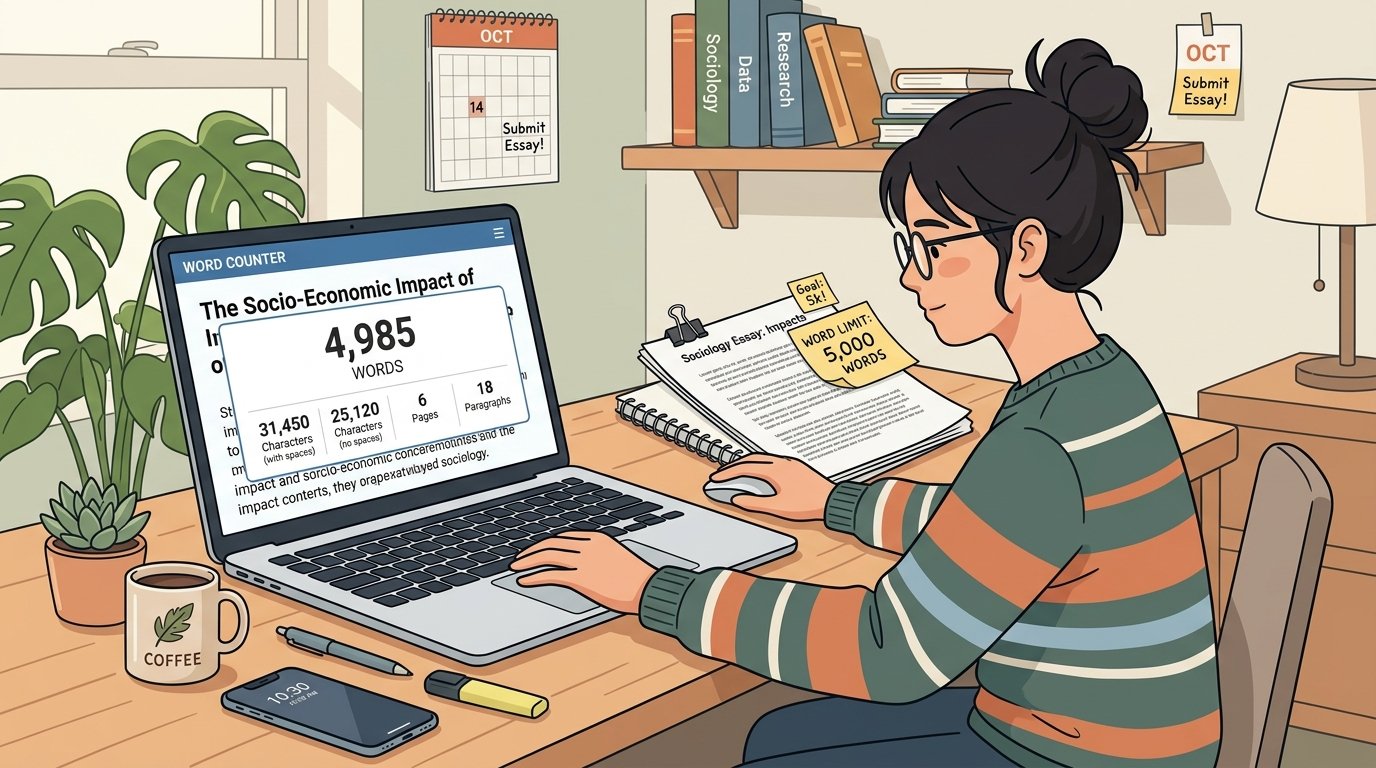
Paste into an online word counter. This is the fastest method by far. A tool like word counter gives you an instant word count, plus character count and estimated reading time, without needing to open a separate program.
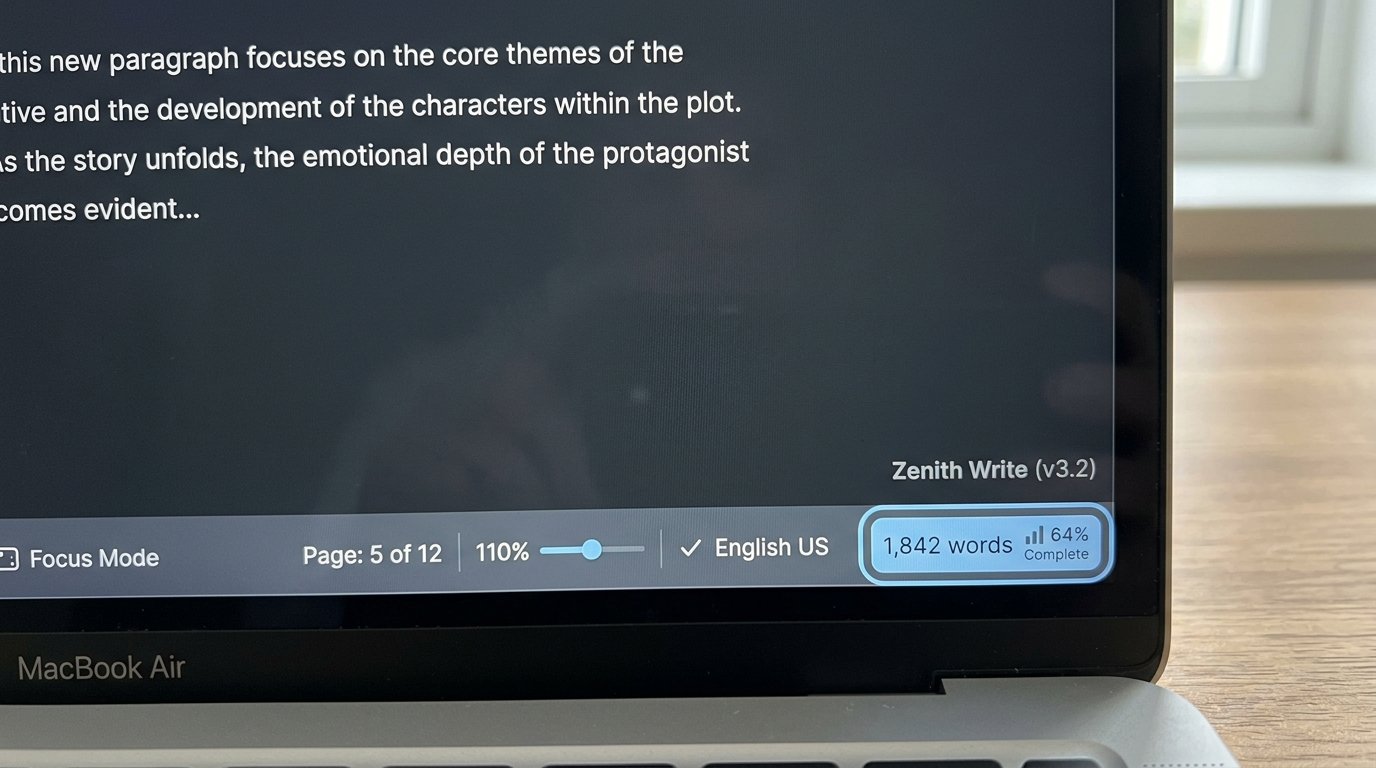
Use your word processor's built-in counter. Google Docs and Microsoft Word both show a live word count in the toolbar or status bar, updating as you type.
Select a portion and count just that section. Useful when you need to check whether your introduction or conclusion has crept too long relative to the body.
For anything you're planning to submit, an online counter is the more reliable option, since it also flags characters — useful if a rubric specifies character limits instead of word limits, which is increasingly common for online submission portals.
What Actually Counts as a "Word"
This is where a lot of confusion comes from. Standard word-counting conventions (the ones used by essay word counters, Word, and Google Docs) count:
Any sequence of characters separated by spaces, including short words like "a" and "the"
Hyphenated words as a single word ("well-known" = one word)
Numbers written as digits, counted as one word each
They typically do not count:
- The title, unless you're specifically told to include it
- Footnotes or a bibliography, unless your instructions say otherwise
- Headers, page numbers, or your name in a header
Always check your assignment brief for exceptions. Some academic departments explicitly exclude in-text citations from the word count; others include everything you submit. When in doubt, ask — guessing wrong here is an easy, avoidable way to lose marks.
How to Hit Your Target Without Padding
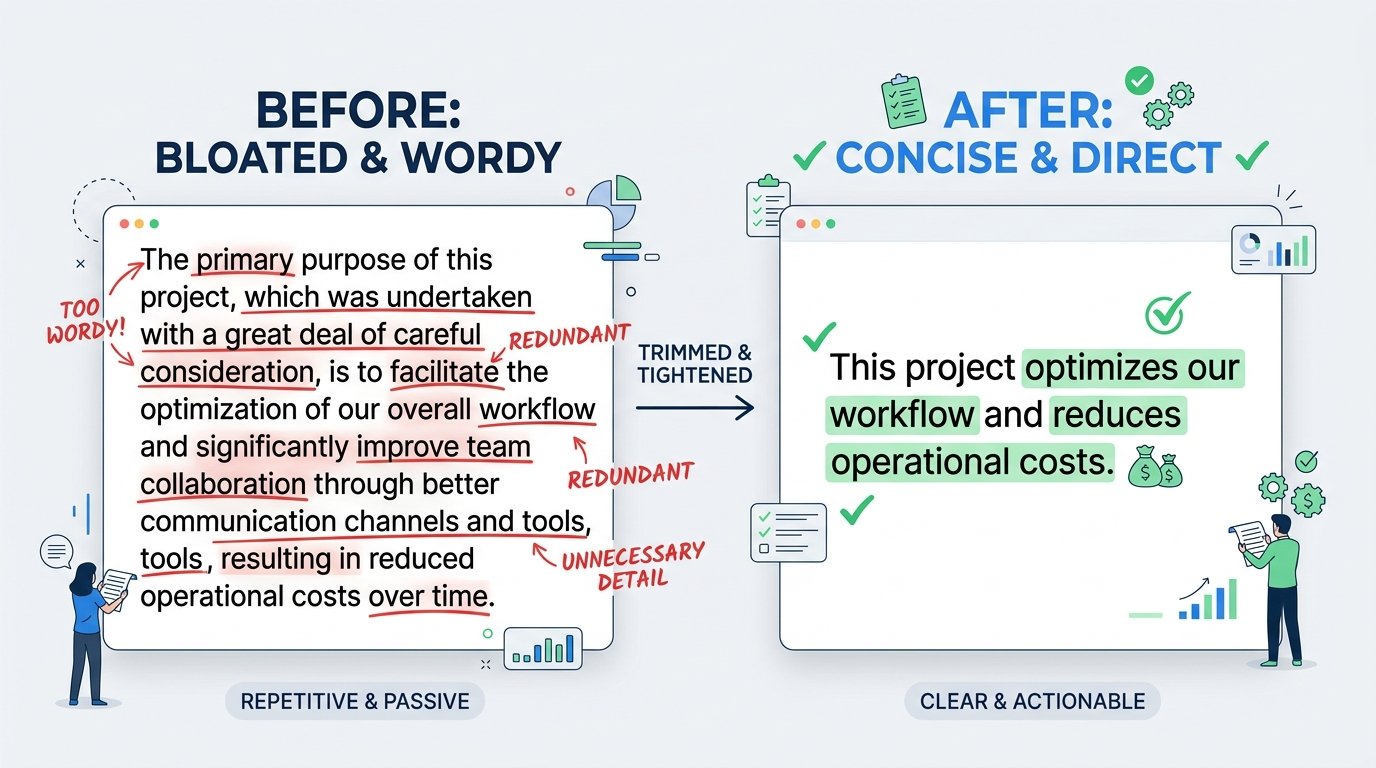
If you're short on words, resist the urge to pad with filler phrases ("it is important to note that," "in today's society"). Graders spot padding instantly, and it weakens your argument rather than strengthening it. Instead:
- Add a second example to support a claim you only illustrated once
- Address an obvious counterargument you skipped
- Expand your analysis of why evidence matters, not just what it says
- If you're over the limit, cut in this order:
- Redundant sentences that restate a point already made
- Long quotations you could summarize in your own words instead
- Throat-clearing openings ("This essay will discuss...")
- Adjectives and adverbs that aren't doing real work
- A Simple Workflow
Draft first without worrying about the count. Once you have a complete draft, paste it into a word counter, check where you stand, and revise deliberately toward the target — rather than counting word-by-word as you write, which breaks your flow and rarely produces your best writing.